What 62% of HCPs restricting access tells us about the real cost of poor customer engagement
When I was out in the field, some 20 (very) odd years ago, I was seeing 6+ HCPs a day. The current reality is very, very far from that with the average in-person call rate in the UK now around 2.41. Healthcare professionals have never been busier, UK GPs see 37+ patients per day and secondary care clinicians are dealing with more than 75 pieces of paperwork a day. As a result, 89% of EU5 clinicians feel more exhausted and burned out than before the pandemic1. So it is no surprise that access is harder than ever to achieve. But HCPs being busy is only one side of the story.
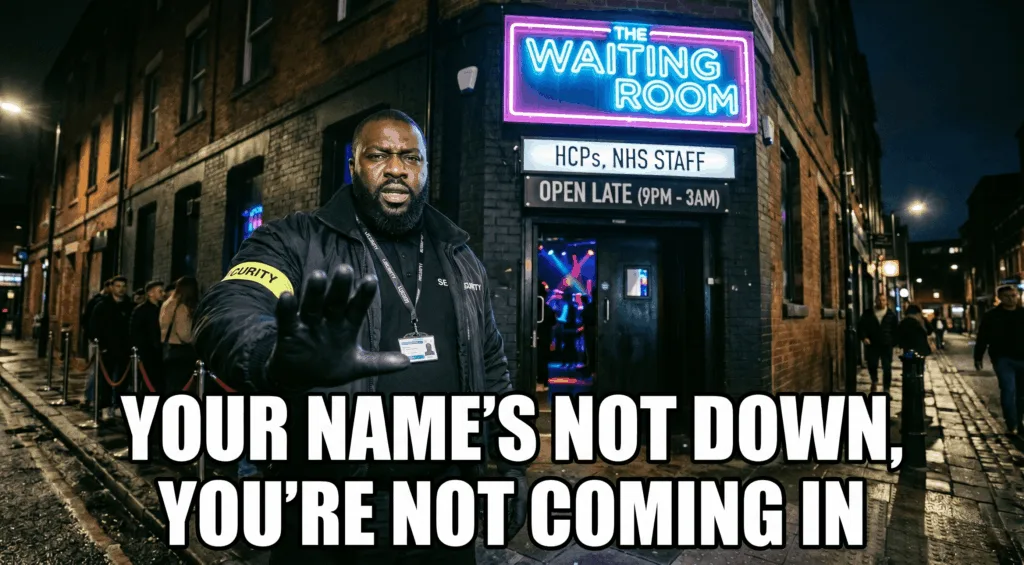
62% of HCPs now restrict access to three or fewer pharma companies. Three, out of an industry of dozens competing for the same diary slot. If you are not one of the three, your product is not in a fair fight for that prescriber. It is not in the fight at all.
When we ran our advisory board earlier this year, one of the practitioners in the room made the point better than any benchmark could. This is simply human nature, they argued. In your own life you keep going back to the people and companies you get on with and trust, and you quietly walk away from the ones you do not, even when you suspect the alternative is the better product. HCPs are no different. Science still matters, it is just not the thing being weighed at the door.
It cuts against an assumption the industry rarely examines: that good science earns access. It does not, or at least not on its own. Access is now rationed, and it is rationed on experience.
The cost is showing up in the data
The quality of those interactions is also getting worse, not better, and the industry’s own benchmark confirms it. The DT Consulting CX Quality score fell from 58 to 54 in 2025, the first significant decline since COVID2. All three pillars that make up that score fell at the same time: trust, relevance and simplicity. Simplicity fell the hardest.
We have spent years adding channels, standing up omnichannel programmes and expanding digital reach. Over exactly the same period, the experience of dealing with us became harder, less relevant and less trusted. We were measuring how much we were doing and, in my view, mistaking it for progress.
A secondary care clinician now receives somewhere in the region of 600 pharma contacts a year, and roughly 65% of them are unsynchronised1. That is not engagement. From the other side of the desk it is noise: messages arriving from different teams, repeating each other, occasionally contradicting each other, none of them aware of what came before. No wonder the door is closing on all but a handful of companies.
And clinicians are not quiet about it. 72% of HCPs do not believe pharma’s engagement strategies are effective3. They are telling us directly, and the access data shows they are acting on it.
One client, when they looked at the data, found that their field teams were busy seeing people, but not the right people. Good frequency and contacts, just over calling providers who didn’t impact the business. Another potential symptom of the problem.
More is not the answer, and never was
The instinct is to do more. More content, more channels, more technology, more touchpoints, but how do we resist it? The industry has been adding and expanding for the better part of a decade, and the scores have gone down the whole time. The problem was never volume. It is the quality of the individual interaction, and whether the next one knows anything about the last one. More of the same will not fix something that more of the same created.
The instinct is hard to fight because activity is visible and stopping is not. Getting content out of the door shows leadership. You are busy and tick the channel box, so the questions from the top tend to be how many emails went out and how many clicks came back. One of our advisors described trying to push back: stop, strategise, look hard at what the team is actually doing. Doing that means accepting a quiet period now, a visible gap in output, in exchange for being better later. It is a hard case to make upwards, and by the industry’s own admission we are bad at saying anything has been deprioritised.
This is also why poor customer engagement is a commercial problem and not a soft one.
Who makes the shortlist
So when an HCP narrows their access to three companies, which three do they keep?
Not the three with the best data. The three that are easiest to deal with. The ones who show up with something relevant, who do not waste the appointment, whose left hand appears to know what the right hand sent last week. The three treating customer experience as a capability they have built, rather than an aspiration they talk about in the brand plan.
None of this is new. As one of our advisors put it, the whole challenge is knowing enough about a customer to send the right thing at the right time, and the best marketers and reps have done exactly that for decades. The cost of not doing it now shows up at the door.
The companies on that shortlist worked this out. The only real question for everyone else is which list they are on.
We are running a panel discussion based on the outputs of our advisory board on 23rd June 2026. This is exclusively for pharma folk only, so please sign up with your work email to avoid missing out.
James Harper is Founder and MD of twentyeightb, a field-first customer engagement excellence consultancy. twentyeightb has worked with more than 20 pharma companies across 15 years.
1. Veeva Pulse Field Trends Report, 2025.
2. DT Consulting, The State of Customer Experience in the Global Pharmaceutical
Industry, 2025.
3. Deloitte, Unlocking the Future of Customer Engagement in Pharma, 2025.